
How to Get Your Real Estate License in Virginia
Short version:
Virginia requires 60 hours of approved pre-licensing education, a passing score on both portions of the PSI licensing exam, a fingerprint-based background check, and an application to the Virginia Real Estate Board. Most people finish in two to four months. A motivated person doing it full time can finish the coursework in about two weeks and the whole process in six to eight.
The honest version nobody puts on a licensing page...
Most people who look this up quit before step one.
Not because it's hard... because it's vague.
They read four different websites, get four different answers, and decide to figure it out later.
Later never comes.
So here's the whole thing in order, with the actual numbers, pulled from DPOR's own forms as of August 2026. No mystery. No "contact us to learn more" before you get a straight answer.
I've put a lot of people through this process. The ones who finish fast aren't smarter. They just knew what was coming next.
Before You Start: Do You Qualify?
Virginia's licensing requirements are straightforward. Just three things
You're at least 18 years old
You have a high school diploma or GED
You can pass a fingerprint-based background check
That's it. No college degree. No experience. No sponsor required to start your education.
On the background check — a conviction is not an automatic disqualifier. The Board reviews applications individually. What sinks people is failing to disclose. DPOR's application asks about felonies and about certain misdemeanors within the past five years. Answer honestly. Concealment is treated far more seriously than the thing you're concealing.
Step 1: Complete 60 hours of Pre-licensing Education
Virginia requires 60 clock hours of a Board-approved course called Principles and Practices of Real Estate.
Every approved school teaches the same required subject areas, because the state dictates the syllabus. What changes between schools is the delivery, the support, and the price.
You'll also have to pass a proctored final exam for the course itself. That's separate from the state licensing exam, and people confuse the two constantly.
What We Recommend, and Why
We partner with The CE Shop for a few reasons:
The curriculum is genuinely good — it's built around real scenarios instead of vocabulary drills. And it's self-paced. That second part matters more than people realize.
Self-paced means an ambitious person isn't held hostage by a classroom calendar. If you want to knock out 60 hours in two weeks, nothing stops you. If you're working full time and can only give it evenings, that works too.
Get the Standard package. Not the cheapest one.
Here's why that's not an upsell... The courses-only package gets you the 60 hours and nothing else. The Standard package adds Exam Prep Edge — a separate study system built off the PSI candidate handbook.
Without it, when you finish the course and need to study for the state exam, your only study material is... the 60 hours you just finished. You'd be re-reading an entire course to prep for a test.
With exam prep, the workflow is clean: get through the material, study the exam prep, take your course final. Three distinct phases instead of one long slog.
Because we put so many people through this course, we almost always have steep discounts running on our enrollment page. Check the current pricing before you buy anywhere else.
*Gillies Team Real Estate is an affiliate of The CE Shop and may earn a commission if you enroll through our link.
Step 2: Pass the PSI licensing exam
Once your school reports your completion, PSI releases you to register for the state exam.
The Virginia salesperson exam is 120 scored questions split into two separately-timed, separately-scored portions:
National portion
80 questions 105 minutes Passing score: 70% — 56 correct
Virginia portion
40 questions 45 minutes Passing score: 75% — 30 correct
Two things people miss here:
The state portion has a higher bar than the national portion. Most states use the same threshold for both. Virginia doesn't. The state section is the tighter gate, and it's the one built on Virginia license law and Real Estate Board regulations.
The sections score independently. You can pass one and fail the other, and you only retake the one you failed. Both have to be passed within one year.
The exam fee is $60 per attempt. Your scores are good for one year and then they expire.
Step 3: Get Fingerprinted
Every applicant for an initial license submits fingerprints for a state and national criminal history check. The results go directly to DPOR — you never touch them.
Two ways to do it:
Walk into a Virginia PSI testing center between 9:00 a.m. and 1:00 p.m., no appointment needed. Or schedule an appointment through Fieldprint at fieldprintvirginia.com.
This step starts a clock. Once the Board receives your fingerprint results, your complete application has to be on file within a set window or you pay to get printed again. DPOR's current form lists that window as 45 days.
The practical move is simple: get fingerprinted after you pass the exam, then submit your application right behind it. Handle both in the same two-week stretch and the deadline never becomes a problem.
Step 4: Submit Your Application to the Virginia Real Estate Board
This process may seem complicated. We have an onboarding specialist who helps new agents walk through this process without the stress.
The Salesperson License Application is a paper form. There's no online option for the initial license — you download it from DPOR, fill it out, sign it, and mail it in.
The fee is $244.50, payable to the Treasurer of Virginia. That figure reflects the technology fee added under 2026's House Bill 30. Application fees are not refundable, so accuracy matters.
Your package needs to include:
Your education certificate
Your passing exam scores
Your completed and signed form
Payment
The deadline that actually matters: your completed application has to reach the Board within one year of the date you first sat for the exam. Miss that and you're retaking the test.
If you're affiliating with a brokerage, your principal broker signs the application after you do. The order of signatures matters — applications get rejected over this.
Step 5: Choose a Brokerage & Activate Your License
A Virginia salesperson license doesn't work on its own.
You practice under a licensed principal broker who takes responsibility for your activity. Until you're affiliated with one, you can't represent a client or earn a commission.
You have two ways to handle it:
Name your brokerage on your initial application, and your license comes back active.
Or apply without a firm, receive an inactive license, and activate later with a separate Activate/Transfer Application and a $90 fee.
So there's no hard deadline forcing you to pick a brokerage...
But an inactive license earns you nothing. It's a piece of paper. Every week it sits in a drawer is a week you're not building a business.
Should a New Agent Join a Brokerage or a Team?
For most new agents, a team gets you to your first closing faster. It supplies what the 60 hours never taught you.
The course teaches law and vocabulary. It teaches you almost nothing about finding a client, running an appointment, or writing an offer that wins.
A brokerage gives you permission to practice.
A good team gives you a system to practice with.
The tradeoff is real. On a team, you share more of each commission... in exchange for business, training, and accountability you wouldn't have on your own.
That trade only pays off if the team actually delivers.
So ask.
What Should You Ask a Brokerage Before You Join?
Where you hang your license is the most important decision in this whole process... and it's the one people spend the least time on.
Ask every brokerage or team you're considering:
What does my first week look like, day by day?
What training happens after week one, and how often?
What does the mentorship and shadowing program look like?
Where do my first clients come from?
What is your philosophy on creating success for new agents?
Curious How Gillies Team Real Estate Answers Those Questions?
Book a Real Estate Career Discovery Call at gtrelaunch.com.
No pitch, no pressure... just straight answers.
More conversations solve most problems. This one included.
Step 6: Your first year — the 30 hours nobody warns you about
This is where some new agents get blindsided.
Virginia requires every newly licensed salesperson to complete a Board-approved 30-hour Post-License Education curriculum within one year of the last day of the month your license was issued. Not continuing education. A separate, nine-course PLE requirement.
Miss it and your license goes inactive automatically. You can't practice until you finish the hours and file to reactivate.
The good news? Once you complete PLE, you don't owe continuing education hours for your first renewal.
What It Costs, Start to Finish
Beyond your course, the Commonwealth charges roughly $356 in fixed costs:
PSI exam — $60 per attempt
Fingerprints — approximately $52
DPOR license application — $244.50
State costs subtotal — about $356.50
60-hour pre-licensing course — varies, see our discounted pricing above
30-hour post-license education — due in your first year
Fees current as of August 2026. Verify with DPOR at (804) 367-8526 before submitting.
How long does it actually take?
Two to four months is typical. Here's the realistic breakdown:
The 60-hour course takes about two weeks full time, or four to six weeks at nights and weekends. Exam prep and scheduling your test runs another two to three weeks. Fingerprints, mailing your application, and DPOR processing takes anywhere from a few weeks to a couple of months depending on the Board's backlog.
The variable that's entirely yours is the course. Self-paced means the schedule is your decision. The people who finish in six weeks aren't gifted... they just treat it like a job instead of a hobby.
The part most people get backwards
Getting licensed isn't the hard part.
The hard part starts the day your license activates and nobody's telling you what to do.
About one in five new agents is still in the business after two years. It's rarely because they couldn't pass the exam. They passed. Then they sat in a brokerage that handed them a login and a desk and wished them luck.
If you're going to spend three months and a few hundred dollars getting licensed, spend one afternoon getting the next part right.
Come talk to us before you pick a brokerage.
No pitch, no pressure. We'll walk you through what your first 90 days would actually look like — where the appointments come from, who trains you, what you'd earn. If it's not a fit, you'll still leave with better questions to ask everyone else.
What's the one thing holding you back from starting?
Common questions about getting licensed in Virginia
How long does it take to get a real estate license in Virginia?
Most people take two to four months. The 60-hour pre-licensing course takes about two weeks full time or four to six weeks part time, exam prep and testing takes another two to three weeks, and DPOR application processing takes several weeks after that. Because approved online courses are self-paced, motivated candidates can finish the education portion much faster.
How much does it cost to get a real estate license in Virginia?
The Commonwealth's fixed costs total roughly $356.50: a $60 PSI exam fee, approximately $52 for fingerprints, and a $244.50 license application fee to DPOR. Pre-licensing courses are separate and range widely by provider. Newly licensed agents also owe 30 hours of post-license education in their first year.
Do you need a college degree to be a real estate agent in Virginia?
No. Virginia requires a high school diploma or GED, not a college degree. You must also be at least 18 years old and pass a fingerprint-based background check.
How many hours of education does Virginia require for a real estate license?
Virginia requires 60 clock hours of a Board-approved Principles and Practices of Real Estate course before you can sit for the licensing exam. Brokers require 180 hours.
What score do you need to pass the Virginia real estate exam?
Virginia uses two different thresholds. The 80-question national portion requires 70%, or 56 correct answers. The 40-question Virginia portion requires 75%, or 30 correct answers. The two sections are scored separately, so you can pass one and retake only the other.
How hard is the Virginia real estate exam?
The state portion is the tougher of the two sections — it carries a higher passing threshold at 75% and is built on Virginia license law and Real Estate Board regulations. Candidates who use a dedicated exam prep program built from the PSI candidate handbook, rather than re-reading their 60-hour course, tend to pass on the first attempt.
Can you take the Virginia real estate course online?
Yes. Virginia approves online pre-licensing providers, and most are self-paced. You'll need to pass a proctored final exam for the course, which is separate from the state licensing exam administered by PSI.
Do you have to join a brokerage to get a Virginia real estate license?
No, but you can't practice without one. You can apply without naming a firm and receive an inactive license, then activate later with an Activate/Transfer Application and a $90 fee. An inactive license doesn't allow you to represent clients or earn commission.
How long do you have to activate your license after passing the exam?
There's no fixed deadline to choose a brokerage. The real deadlines are elsewhere: your completed application must reach the Board within one year of your initial exam date, and once the Board receives your fingerprint results, your application must be on file within 45 days (per DPOR's current application form) or you must be re-fingerprinted.
What is post-license education in Virginia?
Virginia requires every newly licensed salesperson to complete a Board-approved 30-hour post-license education curriculum within one year of the last day of the month their license was issued. It's separate from continuing education. Failing to complete it places your license on inactive status automatically. Agents who complete PLE don't owe CE hours for their first renewal.
Does a criminal record disqualify you from a Virginia real estate license?
Not automatically. The Virginia Real Estate Board reviews applications individually, considering the nature of the offense and time elapsed. Full disclosure is required — failing to disclose is treated more seriously than the underlying conviction.
Who issues real estate licenses in Virginia?
The Virginia Real Estate Board, part of the Department of Professional and Occupational Regulation (DPOR), located at 9960 Mayland Drive, Suite 400, Richmond, VA 23233. The Board can be reached at (804) 367-8526. PSI administers the licensing exam on the Board's behalf.
WHO SUCCEEDS WITH GTRE?
Agents who have the fastest and most sustained success at GTRE are the ones who show up to work, plug into the system, and stay consistent even on the days when it isn’t easy. Consistent action beats raw talent every time — add that to being coachable, accountable, and willing to execute the plan we build together and you will be unstoppable. Lean into the support, use the tools, and commit to daily action. If you can do that, you’ll find that growth, consistency, and success aren’t just possible — they’re inevitable.
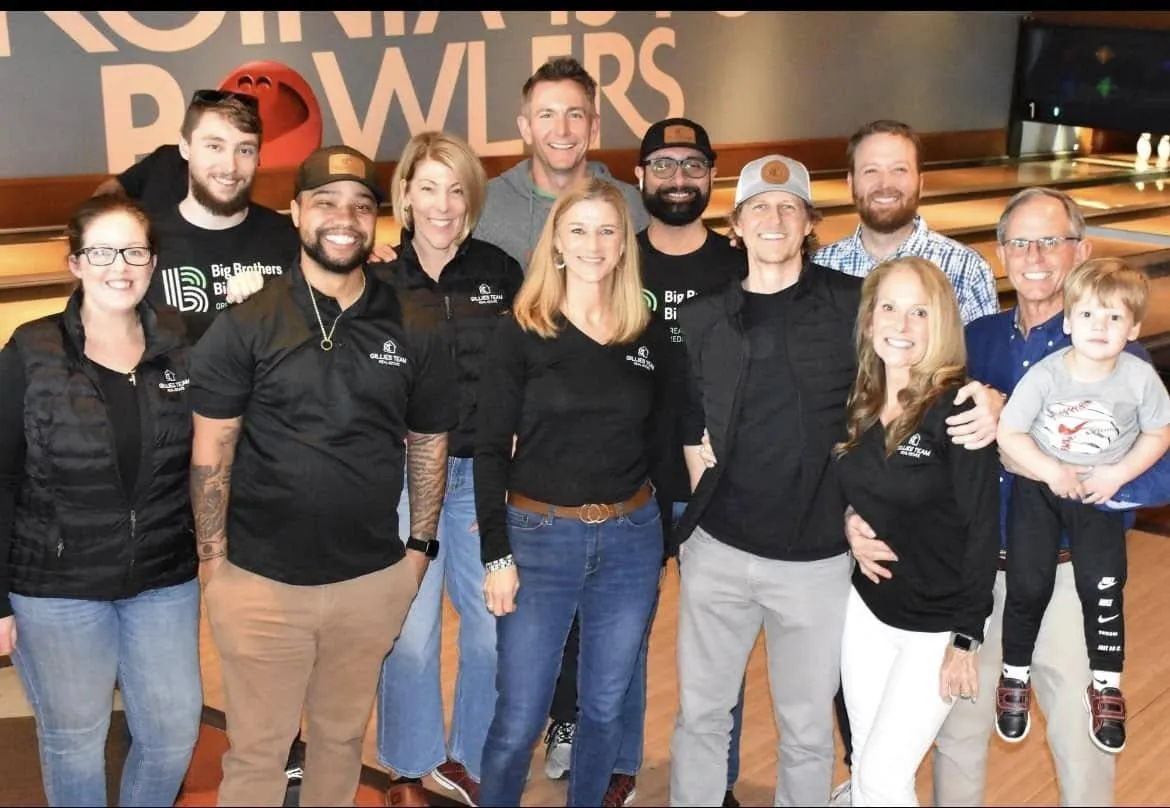
- New agents who want a clear path to closings instead of being left to “figure it out."
- Experienced agents stuck at 6–10 deals a year who know they’re capable of more.
- Producers with strong spheres who want all the leverage, support, and culture of a team without losing commission upside.
CORE VALUES
What We Stand for & Who We Partner With
HUSTLE
Stay Hungry, Be Committed, Overcome Obstacles
HAPPINESS
Positive People Only. No Jerks. Solutions, Not Problems
HUMILITY
Win Together, Lift People Up, Check My Ego at the Door
GROWTH
Adapt or Die, Keep Learning, Stay Coachable
SERVICE
Love the Client, Under-Promise, Over-Deliver, Client Experience Rules
EXECUTION
Consistency Creates Wins, Discipline, Accountable to my Results,
MEET Michael Gillies Team Leader
Licensed in the Commonwealth of Virginia: 0225-187787
I started my career like most agents — grinding in personal production — but I was able to accelerate my success because I had amazing coaches invested in my success: my parents, who started our team and built the foundation of success we still stand on today. Over time, I realized my real passion wasn’t just selling homes, it was creating an environment where other agents could thrive. That’s why I shifted my focus from chasing my own numbers to building Gillies Team Real Estate: a place where agents have everything they need to succeed — leads, coaching, systems, accountability, and a culture that pushes you forward even on the tough days. My job is simple: take the guesswork out of real estate success.
"Building People Builds Production". What makes me proud? The people behind the production. It’s the transformation I’ve seen in our agents. Watching someone step into this environment, gain confidence, and start hitting levels they once thought were out of reach is the most rewarding part of what I do. I’m proud that we’ve built a culture where no one feels alone, where agents know they can lean on each other and on our systems, and where success is shared and celebrated. The wins are great — but the real pride comes from seeing agents realize, “I can do this, and I can do more than I ever thought possible.”